Cedar earns its place in gardens, saunas and boat sheds for good reason. It is light, stable and naturally resistant to rot. It is also soft enough to mark with a fingernail and sticky with resin, and both of those things change the way it should be cut. Choose the wrong saw and you will crush the grain, smear pitch across the plate and spend more time sanding than building. Choose well and cedar cuts like sharp cheese.
What cedar does to a saw blade
Western red cedar is roughly a third the density of oak. Teeth bite easily, but the fibres bruise rather than shear, so a dull blade tears instead of slices and leaves an edge that no amount of sanding quite disguises. Resin and natural extractives build up on the plate and in the gullets, more so on warm days and on green timber. A gummy blade drags, wanders off the line and scorches the cut.
Dried cedar behaves differently again. It is more brittle, and the exit edge of a crosscut will splinter if the teeth have nothing to back them up. Add in that cedar dust is a recognised respiratory sensitiser, and the practical answer is the same for every saw: sharp teeth, good extraction or a mask, and a workpiece you have actually supported rather than balanced on two trestles and hoped for the best.
Handsaws: still the dependable default
For a handful of cuts in a day, a hardpoint panel saw around 550–600 mm long with 8–10 teeth per inch will handle almost everything cedar throws at you. As a rule of thumb, use 7–8 tpi for ripping along the grain, where you need deep gullets to clear waste, and 10–12 tpi for crosscuts, where you want a finer edge.
The technique matters more than the tool. Let the weight of the saw do the work, keep strokes long and level, and resist the urge to push. Cedar is soft enough that forcing a saw simply crushes the fibres ahead of the teeth, and you will feel the blade slow down as it does. A tenon saw at 12–14 tpi is the better choice for joints, trim and anything with a shoulder line you actually care about.
Green or freshly felled cedar gums a blade faster than dry stock. Coarser teeth with generous gullets clear the resin-laden dust better, and a quick wipe of the plate with a rag partway through a session keeps the saw tracking true.
Japanese pull saws: the clean-cut specialists
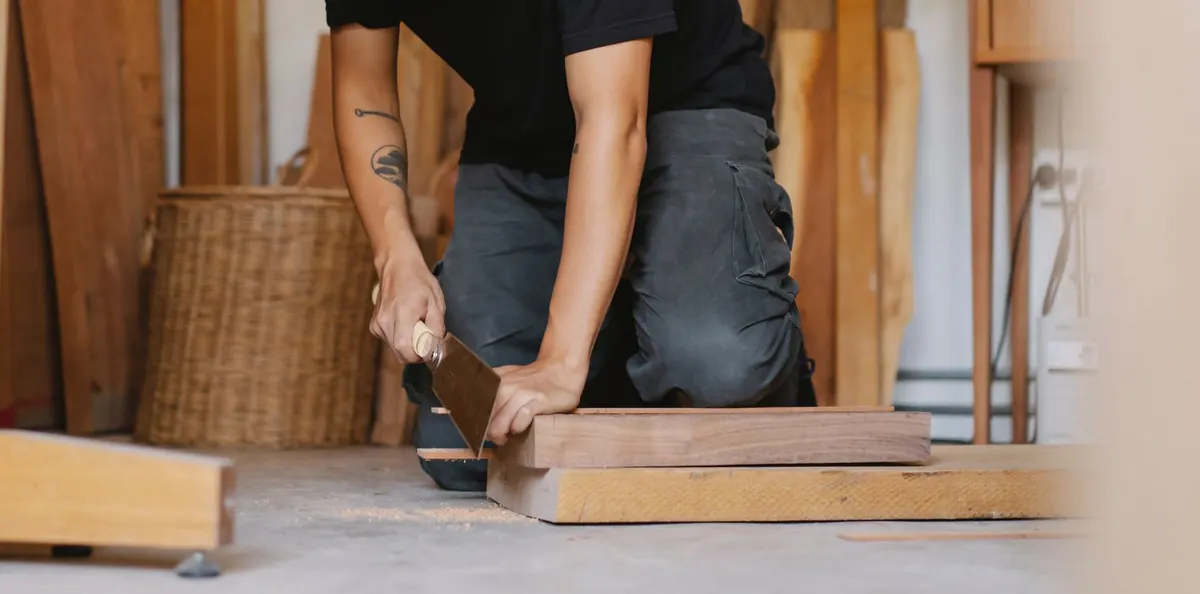
Pull saws suit cedar unusually well. The plate is thin, the set is minimal and the teeth cut on the pull stroke, which tensions the blade instead of buckling it. The result is a narrow kerf — often half a millimetre on a fine dozuki — and a cut that needs very little cleaning up. When you are cutting expensive cladding or thin lining boards, that narrow kerf is worth real money.
Which one to reach for
- Ryoba: two edges on one blade, crosscut on one side and rip on the other. The best all-rounder for cedar.
- Kataba: a single edge with no back spine, so it can cut deep or flush where a stiffened blade cannot follow.
- Dozuki: a reinforced back and the finest teeth of the three. Ideal for tenons, dowels and trimming, but the spine limits depth of cut.
The one caveat is that a thin blade follows the path of least resistance, and soft cedar offers very little resistance. Start with a few short, light strokes to establish a kerf across the end grain, keep the saw at a shallow angle, and let the teeth find their own line. Rush it and the blade will wander and take the corner of a board with it. Blades are replaceable and cheap enough to keep a spare on the bench.
Circular saws: speed for cladding, decking and framing
If you are running cedar boards all afternoon, a circular saw is the only sensible answer. Tooth count decides the finish, so match the blade to the job rather than to whatever is already fitted. A 24-tooth blade is fine for rough framing; step up to 40 teeth for cladding and general trim, and 60 or more for visible faces where the cut will be on show.
On sliding mitre saws and radial-arm saws, look for a blade with a negative hook angle. It reduces the saw's tendency to grab and climb through soft, resinous timber, which is exactly the sort of grab that makes people nervous around cedar. Thin-kerf blades take less power and cut more freely, which matters more on cordless tools.
Feed rate is where most ragged cedar cuts come from. Too fast and you get splintered edges and blowout on the exit face. Too slow and the blade burnishes and heats the timber, baking resin onto the teeth until the cut starts to wander.
Controlling tear-out with a circular saw
A circular saw's teeth exit upward through the top face of the board, so the good face should be facing down whenever it will be visible. Beyond that: score the cut line with a marking knife, run a strip of low-tack tape over it, use a straight edge or guide rail, and fit a zero-clearance throat plate if your saw allows one. Support both sides of the cut on sacrificial timber so the offcut cannot drop and pinch the blade near the end of the pass.
Matching the saw to the job
- Cladding and fencing: circular saw with a 40-tooth thin-kerf blade; a hardpoint handsaw for the odd short cut.
- Garden furniture and pergolas: 24-tooth circular saw for framing, a dozuki or tenon saw for joints.
- Sauna and interior lining: fine-tooth handsaw or dozuki, good face up, light strokes, minimal pressure.
- Strip planking and small boat work: ryoba for scarfs and plank edges, then a block plane to finish.
- Plug, dowel and tenon trimming: a flush-cut pull saw with teeth on one side only.
- Green cedar: coarse hardpoint with deep gullets, and clean the blade the same day.
Resin: prevention beats cleaning
Pitch sets hard, and a blade that was cleaned last month will drag today. Wipe the plate and gullets after every session on cedar with a resin remover, a citrus-based cleaner, or a rag dampened with paraffin. Dry it thoroughly afterwards; water left in the gullets is how a plate starts to rust. Finish with a thin coat of paste wax or a dry PTFE lubricant rather than oil, which collects dust and turns into a paste of its own.
Abrasives are worth avoiding on coated blades, since you will scratch away the very surface that helps the teeth clear waste. Store saws in a sleeve or behind a guard, and if you cut a lot of cedar, keep one blade set aside for it.
A short routine for cleaner cuts
- Pick the blade for the finish you need, not just for speed.
- Mark with a knife on the face you want clean, and tape it if the surface will show.
- Support and clamp both sides of the cut before you start the saw.
- Begin slowly to establish the kerf, then keep an unhurried, steady feed.
- Clean resin off the blade before it goes back on the hook.
- Test on an offcut whenever the cut will be visible.
Cedar is forgiving to work with, but it rewards sharp tools and a light touch more than almost any other timber in the workshop. Keep the teeth fine, the feed steady and the plate clean, and you will spend your time assembling rather than sanding. If you are machining cedar indoors in any volume, sort out extraction and wear a suitable mask; if you notice a persistent cough, wheeze or irritated nose after working with it, stop and take proper medical advice.
Photo: Ono Kosuki / Pexels